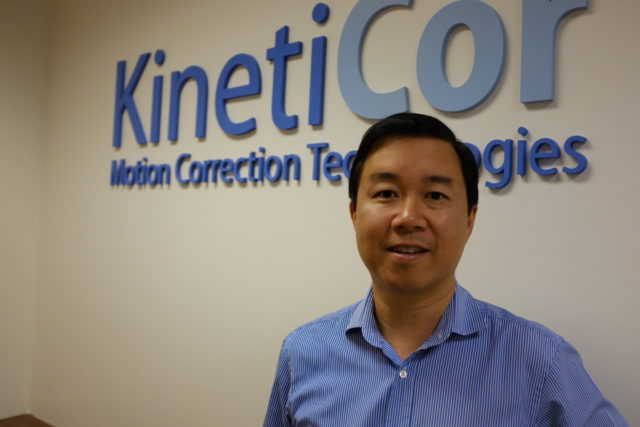
In 2010, Dr. Jeffrey Yu, a radiologist working at Queen’s Medical Center, embarked on a technology treasure hunt. Yu’s boss, Queen’s Chief Executive Arthur Ushijima, asked him to look at research being conducted at the hospital and find what had commercial potential. Yu discovered something promising: technology invented in collaboration with the University of Hawaii to make images from medical scan tests such as MRIs more clear. Seven years later, Yu’s company, KinetiCor Motion Correction Technologies, is a model for successful Hawaii startups. In March the
Tarik Sultan is the Founder and Managing Partner of Sultan Ventures, an investment firm, and Founder and Managing Partner of XLR8UH, the University of Hawaii (UH) venture accelerator program is an active leader in the Hawaiian startup community and focused on talent development. This time for the #StartupsEverywhere, series, he talks with me about his investment fund, promoting women innovators, developing the talent pool and growing the startup community. What’s your role in your ecosystem? My “day jobs” are as Founder and Managing
In a move designed to strengthen the University of Hawaii’s position as a hub for economic development, the state is on the verge of adopting a program designed to help commercialize intellectual property created at UH. House Bill 847, which is now awaiting Gov. David Ige’s signature, would establish the University Innovation and Commercialization Initiative Program along with a special fund to be administered by UH. The bill would let university faculty, staff and students create startups using capital from
Poi Belly, a Hawaiian on-the-go baby food concept company using locally sourced ingredients, took first place in the Startup Weekend Maui event, held from Friday to Sunday at the Maui Research & Technology Park in Kihei. Jody Yoshida, Lauren Burgess and Naomi Glass had 54 hours to create a new business from concept to market in an event, presented by the Maui Economic Development Board, aimed at inspiring the next generation of entrepreneurs, according to an MEDB news release. “I had
Thirty would-be entrepreneurs hit the ground running for the fourth annual Startup Weekend Maui, which began Friday and culminates today at the Maui Research and Technology Park in Kihei. With the overarching theme of “the hardest part of starting up is starting out,” the three-day event, presented by Maui Economic Development Board, is designed to inspire the next generation of entrepreneurs by providing them with an opportunity to learn how to start a business from the ground up — and
We recently had the chance to talk with Rob Saito, Founder of Herbavore, along with Collin Kobayashi, 3D Innovations President and Chief 3D Officer, about the product development process and what it takes to design, protect and commercialize a product. Herbavore is a recent graduate of the XLR8UHstartup accelerator. XLR8UH is one of the first university investment programs in the nation, and is a nationally recognized program that educates, mentors, and invests
Q: I’m an independent entrepreneur with a great business plan. How do I get into an incubator? A: First determine whether an accelerator is the right path for your startup. We get many teams looking for investment capital when they should focus on obtaining a loan or simply on organic growth. If investment capital is the right path, make sure the accelerator you’re applying to is the right fit: You give up equity for the accelerator’s team, mentoring, guidance, network, capital
When Oahu native Mylen Yamamoto showcased her chopstick invention on the eighth season of “Shark Tank,” the exposure generated by the show offset the lack of a deal. “Three weeks ago, we were able to show our idea to 5 million people in one night through ‘Shark Tank,’” Yamamoto told Pacific Business News. “Although we didn’t get a deal, our web traffic went up 275 percent, and we received a lot of interest from restaurants and distributors. We had online
During a flight to Asia, Mylen Fe Yamamoto’s chopsticks kept rolling off her tray table. In a moment of annoyance-turned-inspiration, Yamamoto, then an entrepreneurship professor at Loyola Marymount and Cal State University, came up with the “why didn’t I think of that” idea behind Cropsticks: chopsticks with detachable ends that snap off to become chopstick rests. The idea isn’t new: it’s long been a feature of certain chopstick brands, and made
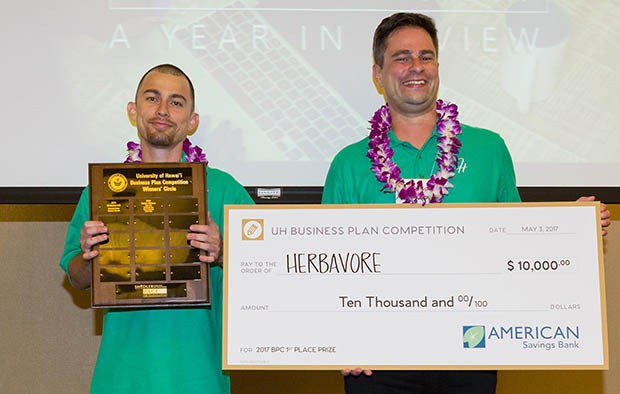
Herbavore, a customizable garden handtool business received first place honors at the University of Hawaiʻi at Mānoa Pacific Asian Center for Entrepreneurship (PACE) 2017 Business Plan Competition at the Waiʻalae Country Club on May 3. Four teams competed for prize packages totaling more than $40,000 in cash and in-kind awards. The UH Business Plan Competition is an intense, experiential program that provides mentorship, training and resources to UH students and faculty who seek to learn what it takes to be an entrepreneur


You must be logged in to post a comment.